Advert

Showing posts with label History. Show all posts

The Himalayas are still weeping, 38 years since Z A Bhutto’s murder


PPP’s leaders chant ‘Bhutto zinda hai!’ they are not very far from reality


GILGIT: It may have only been ceremonial, but the people of GB’s Nagar district still took the crowning of their new king, a tradition dating back 1,200 years, very seriously indeed.

The ruling Mir: A 1,200-year-old tradition that continues to live on


Mir Qasim Ali Khan of Nagar, G-B was crowned five years ago PHOTO: Mir Qasim Ali Khan

Mir Qasim Ali Khan of Nagar, G-B was crowned five years ago PHOTO: Mir Qasim Ali Khan

GILGIT: It may have only been ceremonial, but the people of Gilgit-Baltistan’s Nagar district still took the crowning of their new king, a tradition dating back 1,200 years, very seriously indeed. Dancing to the beat of a drum, his subjects were in full attendance at the ceremony in 2011.

Along with Hunza, Nagar was also an independent princely until former prime minister Zulfiqar Ali Bhutto revoked their status in the early 1970s. However, the ceremonial king – called a Mir – continues to warm the throne. Mir Qasim Ali Khan was crowned at the age of 27 some five years ago. The coronation was 40 days after the death of his father Mir Barkat Ali in a car accident.

The little known shamans of Nagar Valley

The ceremony was held at the royal palace, a place which has seen various kings rule in a glorious past over the centuries. As part of tradition, a child placed the crown on the new king’s head, while another person draped an overcoat called the choga on him. As the Mir got ready, he delivered his first speech before an audience which included government VIPs and other people of Nagar, besides the royal family. The ceremony swiftly turned into a festivity. “It was an occasion that reflected our glorious past,” says Ismail, a resident of Nagar as he recalled the king’s coronation. “The Mir is our pride; even if it is just a ceremonial title.”


Mir Qasim Ali Khan at a public gathering. PHOTO: EXPRESS


Nagar is where the famous Anglo-Brusho war was fought in 1881. Though the locals were defeated, the British Empire realising the intensity of battle toughness and awarded three Victoria Cross to its commanders later.

The new Mir

Mir Qasim Ali Khan is the eldest son of Mir Barkat Ali, who died at the age of 64. The late king, whose wife is from Sialkot, was also a CSS officer with the Foreign Service. Mir Qasim, who was born in Singapore, graduated from University of Buckingham.

However, he could not continue with his higher education after the death of his father. The current Mir’s in-laws are from Peshawar and his father-in-law is barrister Iftikhar Ahmed who is affiliated with the Pakistan Peoples Party. Qasim’s family is currently settled in England and their next home is Islamabad where they have their property.

Entitlements

Like his father and grandfather, Mir Qasim is entitled to certain privileges offered by the government of Pakistan to recognise their previous status as Nagar’s rulers. Besides a remuneration of approximately Rs30,000, the Mir is also entitled to retain seven levies personnel and a gunman. He is also entitled to have a red number plate on his car.

Making space: Classrooms double as hotel rooms due to tourist influx in G-B

However, the Mir has not been provided the honorarium, which is also called a Guzara Allowance, despite having been crowned five years ago. “I don’t understand the delay,” Mir Qasim said in an exclusive interview with The Express Tribune this week. “Let’s hope this come through sooner [rather than later],” he adds. The king spends most of the summer in his ancestral palace at Nagar.

Views about G-B

Qasim believes every citizen of G-B is special because of the region’s status. “Every citizen must have a diplomatic status given that our forefathers liberated the region and decided to join Pakistan voluntarily,” says Mir, whose grandfather Mir Shokat Ali was among the rulers who opted to become part of Pakistan.

It was also during his time that Bhutto decided to abolish the ‘state’ status of the region in the early 1970s and later introduce a political system managed by the bureaucracy. “My mission is to serve my people and that’s why Nagar and its people are the centre of my attention.”

The Mir gets upset when he hears about conflict between the people of G-B on sectarian grounds. “It is painful to say the least,” says Mir Qasim, who is Shia, but his mother is Sunni.

Political ambitions

Qasim contested elections for the G-B legislative assembly in 2015. He lost by just 150 votes, but it brought his ambitions to serve the people to the fore. It was different to the way his forefathers, or past kings, ruled for centuries. Nagar district is located 65 kilometres north-east of Gilgit on Karakoram Highway. The valley, just short of Hunza, comprises around 30 villages with a population of approximately 90,000.

courtesy Express Tribune 

Ancient temples in the Himalaya reveal signs of past earthquakes


Tilted pillars, cracked steps, and sliding stone canopies in a number of 7th-century A.D. temples in northwest India are among the telltale signs that seismologists are using to reconstruct the extent of some of the region's larger historic earthquakes.


In their report published online July 27 in Seismological Research Letters, Mayank Joshi and V.C. Thakur of the Wadia Institute of Himalayan Geology show how the signs of destructive earthquakes are imprinted upon the ancient stone and wooden temples.

The temples in the Chamba district of Himachal Pradesh, India lie within the Kashmir "seismic gap" of the Northwest Himalaya range, an area that is thought to have the potential for earthquakes magnitude 7.5 or larger. The new analysis extends rupture zones for the 1905 Kangra earthquake (magnitude 7.8) and the 1555 Kashmir earthquake (possibly a magnitude 7.6 quake) within the Kashmir gap.

The type of damage sustained by temples clustered around two towns in the region -- Chamba and Bharmour -- suggests that the Chamba temples may have been affected by the 1555 earthquake, while the Bharmour temples were damaged by the 1905 quake, the seismologists conclude.

The epicenter of the 1555 earthquake is thought to be in the Srinagar Valley, about 200 kilometers northwest of Chamba. If the 1555 earthquake did extend all the way to Chamba, Joshi said, "this further implies that the eastern Kashmir Himalaya segment between Srinagar and Chamba has not been struck by a major earthquake for the last 451 years."

The stress built up in this section of the fault, Joshi added, "may be able to generate an earthquake of similar magnitude to that of the 2005 Kashmir earthquake that devastated the eastern Kashmir."

That magnitude 7.6 earthquake killed more than 85,000 people, mostly in north Pakistan, and caused massive infrastructure damage.

To better understand the historical earthquake record in the region, Joshi and Thakur examined several temples in the region to look for telltale signs of earthquake damage. It can be difficult at first to distinguish whether a tilted pillar, for example, is due to centuries of aging or to earthquake deformation.

But Joshi noted that archaeoseismologists are trained to look for regular kinds of deformation to a structure -- damages "that have some consistency in their pattern and orientation," said Joshi. "In the cases of aging and ground subsidence, there is no regular pattern of damage."

At the temples, the researchers measured the tilt direction, the amount of inclination on pillars and the full temple structures, and cracks in building stones, among other types of damage. They then compared this damage to historic accounts of earthquakes and information about area faults to determine which earthquakes were most likely to have caused the damage.

"In the Chamba-area temples, there are some marker features that indicate that the body of the temple structure has suffered some internal deformation," said Joshi. "The pillars and temple structures are tilted with respect to their original positions. The rooftop portions show tilting or displacement."

Other earthquake damage uncovered by the researchers included upwarping of stone floors, cracked walls, and a precariously leaning fort wall.

"The deformation features also give some clues about the intensity of an earthquake," Joshi explained. "For example if a structure experiences a higher intensity XI or X, then the structure could collapse. But if the structure is not collapsed but it tilts only, then it indicates that the structure experienced lower intensity of IX and VIII."

The Mercalli intensity scale is a measurement of the observed effects of an earthquake, such as its impact on buildings and other infrastructure. Scale measurements of VIII ("severe") and IX ("violent") would indicate significant damage, while higher scale measurements indicate partial to complete destruction of buildings, roads, and other infrastructure.


Story Source:

The above post is reprinted from materials provided by Seismological Society of America. Note: Materials may be edited for content and length.


Journal Reference:

  1. Mayank Joshi and V.C. Thakur. Signatures of 1905 Kangra and 1555 Kashmir earthquakes in medieval period temples of Chamba region, NW Himalaya. Seismological Research Letters, 2016 DOI:10.1785/0220160033


Bhutan Lit Fest to take in 400 years of history

title=

Alongside exploring contemporary issues facing the country on Monday, "Mountain Echoes", the seventh edition of Bhutan's literary festival, will also focus on the 400th anniversary of the arrival of Zhabdrung Ngawang Namgyel, the first ruler to unite it as a single nation.

Spanning the country’s full history at fest will be a conversation between Kuenga Wangmo, Neyphug Trulku and Dasho Sangay Khandu, who will discuss the journey of undoubtedly one of the greatest figures in Bhutan's history, festival co-director Namita Gokhale said in a statement.

"An initiative of the India-Bhutan Foundation in association with Siyahi, Mountain Echoes, to be held from August 26 to August 28 is a confluence of art, music, literature and new media of both countries, serving as the ideal platform for debate, discussion, and cultural exchange," Gokhale said.

The event will be held in conjunction with the Tsechues Buddhist religious festival.

"What mask dancers are to the Tsechues, authors are to the Mountain Echoes," said Tshering Tashi, the festival co-director from Bhutan.

"Its idyllic location and programme of events makes it one of the most unique literary festivals and a leading event in the international literary calendar," he added.

"We are all looking forward with eager anticipation to the seventh edition of this exquisite festival. High altitude thinking in the unique cultural climate and rarefied environment of the ancient kingdom of Bhutan, which is also the world's youngest democracy," Gokhale said.

With 60 percent of its land covered in forests, Bhutan is considered to be one of the greenest countries on the planet.

According to the ECIU (Energy and Climate Intelligence Unit), Bhutan's forests absorb three times more CO2 emissions than its society creates, making it carbon negative.

The literary festival will open with a conversation on "Climate Change and its Impact", presented by Indian author Amitav Ghosh and introduced by Indian ambassador Jaideep Sarkar.

This year the festival will announce the inaugural edition of "Bonfire Tales" : A cultural journey that travels via motorcycle to the Phobjikha valley in the black mountains of Bhutan and then onto the warm climes of Punakha.

Participants will be led by the Bhutanese actor Kelly Dorji, on a tour specifically designed to provide an authentic experience of Bhutanese culture, discovering religious sites, old monasteries and their art, while sampling delicious local cuisine throughout the journey.


Courtesy thestatesman.com


Massive stone structures dotted across the subcontinent provide a fascinating glimpse into India’s prehistoric past

Exploring India’s megalithic culture, a riddle set in stone

What is the most strikingly common feature of prehistoric cultures, from the icy fjords of Norway to the tropical plains of Tamil Nadu?


All of them, seemingly independently, struck upon the idea of erecting massive stone structures during the same era in history. These monuments—yes, these are the earliest surviving man-made monuments we know of—are called megaliths, derived from the Latin mega (large) and lith (stone).


Megaliths were constructed either as burial sites or commemorative (non-sepulchral) memorials. The former are sites with actual burial remains, such as dolmenoid cists (box-shaped stone burial chambers), cairn circles (stone circles with defined peripheries) and capstones (distinctive mushroom-shaped burial chambers found mainly in Kerala). The urn or the sarcophagus containing the mortal remains was usually made of terracotta. Non-sepulchral megaliths include memorial sites such as menhirs . (The line separating the two is a bit blurry, since remains have been discovered underneath otherwise non-sepulchral sites, and vice versa.)


Taken together, these monuments lend these disparate peoples the common traits of what we know as megalithic culture, one which lasted from the Neolithic Stone Age to the early Historical Period (2500 BC to AD 200) across the world. In India, archaeologists trace the majority of the megaliths to the Iron Age (1500 BC to 500 BC), though some sites precede the Iron Age, extending up to 2000 BC.


For a while, scientific consensus was in favour of the theory that ideas emanated from a single cultural centre and were transported across the world by migrating populations—trans-cultural diffusion. Radical diffusionists went a step further, denying the possibility of parallel evolution of ideas completely, and asserting that all cultures and inventions can be tracked down to a single culture.


Modern research, however, increasingly disputes this view, with a tilt in favour of independent origin of ideas and inventions. “Constructing a menhir is one of the simplest things man could have done. However, the similarities are indeed startling in the case of the more complex dolmens. The question of why they appear almost coincidentally has not yet been settled satisfactorily, though scientists now postulate that since our brains are constructed in the same way, different peoples came to construct the same monuments independently,” says Srikumar Menon, professor of architecture, Manipal University.


Southern man


Megaliths are spread across the Indian subcontinent, though the bulk of them are found in peninsular India, concentrated in the states of Maharashtra (mainly in Vidarbha), Karnataka, Tamil Nadu, Kerala, Andhra Pradesh and Telangana.


According to archaeologists R.K. Mohanty and V. Selvakumar, around 2,200 megalithic sites can be found in peninsular India itself, most of them unexcavated. Even today, a living megalithic culture endures among some tribes such as the Gonds of central India and the Khasis of Meghalaya.


<br/>


But who were the megalithic people really? What were their religious beliefs? How was their society organized? And where do they fit into the historical narrative of the Indian subcontinent?


The history of prehistoric India is one of epic migrations. From genome data, we know there were waves of migration from 70000 BC to 40000 BC. Consequently, there are four linguistic groups in India: Austro-Asiatic (the oldest), Tibeto-Burman, Dravidian and Indo-Aryan (the most recent).


According to Mayank Vahia, a scientist at Tata Institute of Fundamental Research, who has studied the genetic history of the subcontinent, there was no significant migration into India between 40000 BC and 2000 BC, when Sanskrit-speaking Indo-Europeans first made their presence felt. As megalithic societies were preliterate, the racial or ethnic origins of the megalithic people are thus difficult to pin down.


The discovery of a stone axe with what seemed to be inscriptions in the Harappan script from a burial chamber in Tamil Nadu did bring up the tantalizing possibility of cultural contact between Harappans and the megalithic people.


Iravatham Mahadevan, renowned epigraphist and vocal proponent of the Dravidian origins of Harappan civilization, had declared, “This confirms that the Neolithic people of Tamil Nadu shared the same language family as the Harappan group, which can only be Dravidian. The discovery provides the first evidence that the Neolithic people of the Tamil country spoke a Dravidian language.”


However, Ravi Korisettar, retired professor of archaeology at Karnatak University, says these claims have been summarily dismissed by a committee of archaeologists. “These were accidental scratch marks which resembled the Indus script,” he says.


Korisettar has conducted extensive research on the mortuary practices, belief systems and political economy of megalithic peoples. He says megalithism can be given credit for the rise of the political economy typical to settled communities. “Megaliths were not built for commoners. They signify the emergence of a ruling class or elite who presided over a surplus economy,” he says.


Based on archaeobotanical research, Mukund Kajale of University College London posited that megalithic people carried out agricultural activity in both the rabi and kharif seasons. A large variety of grains such as rice, wheat, kodo millet, barley lentil, black gram, horse gram, common pea, pigeon pea and Indian jujube have been recovered from habitations, showing that the subcontinent has displayed remarkable gastronomic continuity over three millennia.


But what about continuity in belief systems?


Korisettar says that the very idea of burying the dead along with burial goods indicates strong belief in life after death and possibly rebirth among megalithic people. “In some instances, we have seen teeth being cut off from the body and buried with the remains for use in the next life,” he says.


The respect accorded to the buried individual ensured that the grave and the goods contained within were not subjected to vandalism and theft. Paddy husk has been found in burial sites, further proof of the megalithic peoples’ commitment towards ensuring their dead a comfortable afterlife. They also believed in some idea of a soul.


“Sangam literature has a few mentions of the soul reaching the upper world out of three worlds,” says Selvakumar, who has excavated several megalithic sites and studied references to megalithic culture in Tamil Sangam literature.


Their belief in the three worlds can be deduced from a peculiar object recovered from an excavation: a tripod made by three copper rods arranged conically on a circular base. On all three rods, the figures of deer, bird and fish were fixed on the base, middle and on the conical top, respectively, representing the deer on the ground, the bird in the air and the fish in water.


“This item must have had some religious and ideological connotation of life or death as accepted by the megalithic people. According to Mohanty, findings of such item from burial may have significance on their belief system of the dead travelling through three different worlds,” notes Dilip Chakrabarti, emeritus professor of South Asian archaeology at Cambridge University, in the third volume of his History of Ancient India.


The living megalithic culture in India provides strong hints regarding the belief systems of prehistoric megalithic people. “The Gond people believe in life after death, they believe that every human being has two souls: the life spirit and the shadow. The life spirit goes to bada devta but the shadow still stays in the village after the erection of stone memorial. Gond people believe that the first and foremost duty of the shadow spirit is to watch over the moral behavior of the people and punish those who go against the tribal law,” notes a paper by S. Mendaly on the living megalithic culture of the Gonds of Nuaparha in Odisha.


Interestingly, the popular Indian belief in the evil eye—buri nazar in Hindi—may be a legacy of the megalithic age. Banded agate beads with eye patterns have been recovered from megalithic sites. These were generally used by them as protection against evil spirits, a belief that survives to this day in India in the form of nazar battus such as amulets or strings of limes and chillies.


Building megaliths


Understandably, the construction of megaliths was a massive endeavour, requiring the active involvement of the community. “Experiment on reconstruction of a burial from Vidarbha suggests that 70 to 80 individuals were required to construct a burial having 13.5m diameter with a deposit of 80 to 85 cm in two and half to three days without any leisure... Participation in construction by the community members could be social norm without labour charge. If not by any labour charge, a feast was probably prepared to honour the labour force provided by community members. Animals were probably scarified and a feast was prepared beside various other food items,” writes Chakrabarti.


To back this theory, just the non-consumable parts of a horse—i.e., skull and hoof bones—have been recovered from excavated burials in Vidarbha, dating back to 700-800 BC, indicating the rest was consumed in a feast. “In ethnographic parallels, sacrificing buffalo among Hill Soras of Odisha and Mithun (bos frontalis) among tribes in Arunachal Pradesh for preparation of feast in death ritual is a still prevalent custom,” notes Chakrabarti.


The paper by Mendaly on the megalithic practices of Gonds says, “They invite their relatives and friends from other villages and other castes, and erect the memorial stone in a burial complex or matha. After that a sheep or goat is be slaughtered in honour of the deceased, and its meat eaten at the feast, but before that they offer this meat to their village deity and their ancestors. They believe that the animals killed in this occasion are supposed to become the property of the deceased in the spirit world and there is the belief that if this ceremony is not organized then they face serious problems throughout the year.”


The huge slabs required for constructing the dolmens were cut from the rock using the primitive mining technique of fire-setting, according to Korisettar. The rock is heated to the desired level and cooled rapidly by dousing it with water. The sudden change in temperature causes the rock to break off. This was a common method in prehistoric times and even in the recent past, before the advent of dynamite.


Historical continuity


But where do these people fit into the historical narrative of India? According to Korisettar, the collapse of trade gave rise to a change in the urban character of the Harappan civilization. The Harappans then diffused eastwards and came into contact with the early agricultural settlements in the Gangetic plain and moved southwards, and gradually reverted to a more primitive way of life. This is indicated by the smaller, but greater number of settlements found after 1800 BC, compared to earlier sites.


“They again gradually developed themselves into prosperous agricultural communities and began to develop into complex societies. Megalithism indicates the developments of a second urbanization, a chieftain society or chiefdoms, as reflected in monumental architecture as well as other aspects: surplus being generated, multiple crops including cash crops and horticultural crops, mineral, stones. Essentially, the emergence of Megalithic period marks the beginning of second urbanization in various parts of India beyond what was covered by Indus Valley Civilization,” says Korisettar.


While their association with the Iron Age breaks down in the case of some older megaliths dating to 2000 BC, megaliths in peninsular India are more strongly associated with a characteristic wheel-made pottery type known as Black and Red Ware, which is found across sites.


BRW culture was contemporaneous with the Painted Grey Ware culture present in the Ganga valley (1300-600 BC), a proto-urban culture associated with Hastinapur of the Mahabharata by noted archaeologist B.B. Lal. Painted Grey Ware was contemporaneous with and succeeded by the Northern Black Polished Ware culture associated with the Mahajanapada period (600-300 BC), a more developed urban society stretching from Bengal to Peshawar. The Mahajanapadas consisted of the sixteen city republics of Magadha, Chedi, Gandhara and other familiar names from the Mahabharata.


Clearly, while the Kauravas and the Pandavas were battling it out in the plains of Kurukshetra, megalithic people in peninsular India were building monumental burial structures for prominent people in their community. But while no material remains of the fantastical palaces described in the Mahabharata are to be found, these unfussy megaliths have managed to weather 3,000 years of tumultuous history.


Material remains


In concordance with their belief in life after death, the megalithic people were in the habit of interring burial goods along with mortal remains. These can be broadly categorized as “ceramic, iron and copper artefacts, beads of various raw materials, gold & silver ornaments, terracotta objects, objects of art and miscellaneous objects”, according to Chakrabarti.


The range of iron artefacts recovered indicate that the megalithic people practised a wide range of occupations and included carpenters, cobblers, bamboo craftsmen, lapidaries engaged in gemstone work, blacksmiths, coppersmiths and goldsmiths, proof of complex social organization. Beads made of various semi-precious stones and steatite have also been found. Bronze figurines of animals like buffaloes, goats, tigers, elephants and antelopes have been recovered from inside urn burials at the site of Adichanallur in the Tirunelveli district of Tamil Nadu.


Significantly, Roman coins have been found in some megalithic burials in Tamil Nadu and Kerala. “Finding of coins from megalithic burial has chronological significance of their [megalithic people’s] continuation till the early historic period and interaction of trade,” notes Chakrabarti.


In fact, megalithic culture finds several references in ancient Tamil Sangam literature. For instance, menhirs are referred to as nadukal. Ancient Sangam texts lay out, in detail, a step-by-step procedure for laying a memorial stone or nadukal in honour of a fallen hero. According to an article by E. Iniyan, former guest lecturer at the University of Madras, in the International Journal of Social Science and Humanity, this procedure later evolved into the rituals for the consecration of idols in Hindu temples, as described in the Tamil Agamas, a collection of sect-specific scriptures.


“Manimekalai (5th century AD), the famous Buddhist epic, refers to the various kinds of burials namely cremation (cuṭuvōr), post excarnation burial (iṭuvōr), burying the deceased in a pit (toṭukuḻip paṭuvōr), rock chamber or cist burial (tāḻvāyiṉ aṭaippōr), urn burial encapped with lid (tāḻiyiṟ kavippōr). Even in the Sangam age (when kingship and a well ordained society had emerged) the above modes of burials survived,” writes Iniyan.


Also, there are indirect references to dolmens as pantar kal, which has evolved into today’s pandal, a temporary tent-like structure, says Selvakumar.


“Raising a canopy is a simple method to create a shrine and it is used in contemporary South India. In rural Tamil Nadu, such small shrines (resembling dolmens) are created by using four bricks below the neem or any tree considered, so that the oil lamp does not go off due to rain and wind. Perhaps it is a symbolic way to protect the dead from rain and sun,” he writes in his paper on Cognitive Aspects of the Megalithic Cultures of South India.


Interestingly, social relations are also illuminated by some poems in Sangam literature. Selvakumar says, “One beautiful poem is about the lamentation of a lady.


O potter who makes pots!


O potter who makes pots!


I’ve come with him past many


wastelands like a small white


lizard stuck on the spoke of


a cart wheel. Potter who makes


pots in this vast ancient town,


please show pity on me and


create a great big burial urn


larger than the widespread land!


The metaphor of a “lizard stuck on the spoke of a cart wheel” indicates that the megalithic age was highly patriarchal and women didn’t have an independent existence outside of their husband. Also, the fact that the lady wishes to be buried along with her husband may be indicative of a form of sati. “The double burials with male and female skeletal remains in some cases might point towards the practice of sati or the deaths that occurred within a short span of time,” writes Selvakumar.


Though the individual poems are dated to around 300 BC, some poems may reflect the circumstances many centuries before, even a millennium earlier, writes Iniyan.


Intriguingly, Sangam literature also has an instance of a woman cleaning up a dolmen with cow dung, hinting at ‘cult of the dead’ whereby these burials were worshipped and regularly maintained. It also raises the question of parallels between temples and dolmens. And there might just be a connection.


“It is no doubt that the construction and worship of stupas have evolved from the cult of the dead,” writes Selvakumar. Some researchers, like Menon of Manipal University, point to continuity between the architectural aspects of protohistorical megalithic dolmens and early temple architecture. Menon has conducted extensive research on the 6th century AD Badami Chalukyan temple architecture of Aihole, a “crucible of early temple architecture” where temples belonging to the northern Nagara architectural style and the southern Dravida style stand side by side.


More intriguingly, Menon says that the 25km stretch of the Malaprabha river housing the temple laboratories of Aihole, Badami and Pattadakal, seems to be a “memorial landscape, with monuments of varied scale and for commemorating departed souls”.


The landscape is littered with Iron Age megalithic dolmens, some right next to the temples under construction.


“Since it is inconceivable that the builders of the temple would not have noticed the megaliths, which are both numerous and prominent, the fact that they left them undisturbed despite so much construction activity in the neighbourhood suggests that the megaliths held cultural significance for them,” writes Menon. “One look at the form of some of the small shrines scattered among the larger temples of the Pattadakal Group shows that they are only the next step from dolmens to structural temples. The Malaprabha Valley offers a very good case illustrating the continuity between monument building traditions in prehistory and later times.”


Need for preservation


Belying their historical significance, megalithic burial sites today are found in various states of neglect. While some are still intact, many have been damaged by entrepreneurial folks carrying away the stone slabs for construction purposes. “Unfortunately, megaliths have borne the brunt of development since the 1980s when JCBs and mechanical earthmovers were employed to clear the way for real estate development. Even within the Chennai region many of these have been destroyed as urban boundaries have expanded,” says Selvakumar.


A visit to Marayoor, a small town located around 40km downhill from Munnar, famed for its cave paintings and picturesque dolmens, shows the abysmal state of megalithic monuments in India.


The dolmens have been disfigured by modern decadence—which pays scant respect to antiquity—a repository of no burial goods, but only broken beer bottles, Lays chips packets, cigarette butts and bits of plastic bags.


There are no instructive signboards, no celebration of this feat of monumental architecture. It is as if this intriguing period in Indian history has been glossed over by our Delhi-centric historiography and was thus never able to make an impression on public memory. Compare this with the Stonehenge, a world-famous megalithic monument which draws millions of visitors from all over the world. Selvakumar thinks governments should build megalithic parks to help preserve these fast-disappearing monuments.


Dolmens were usually built on barren land, so they couldn’t be damaged by agricultural activity, often at an elevation overlooking their habitation settlement, and Marayoor provides ample evidence for this. Dolmens there—called muniyaras by locals, who probably thought it was a meditation chamber for munis (ascetics)—are located behind the village high school on a rocky hillock overlooking a fertile valley, with a gorgeous view of surrounding hills and of the Pampa river serenely flowing down to the Bay of Bengal.


<br/>


Regimes have changed hundreds of times since they were built, but the dolmens have stood their ground on this terrain unceasingly for more than 3,000 years. As the term Muthukaadu in Sangam literature signifies, our burial-worshipping ancestors were quite aware that though people die and society is destroyed, only their burials will endure as stony sentinels, observers to the ravages of time and the vagaries of history.


Rajat Ubhaykar is a Mumbai-based journalist and an ardent history buff.


He can be found on Twitter @rajatub

History amid natural beauty: Tawang in Arunachal Pradesh has a culture of its own


Tawang in Arunachal Pradesh is one of those fabulous destinations, which is fascinating for any tourist but rarely finds its way to their checklist. This hilly destination is surrounded by beautiful glacial lakes in and around the valley with crystal clear blue waters. Encircled by lofty and magnificent mountains,                     Tawang is for


the eyes. 


Situated at 10,000 feet above sea level, Tawang has Tibet to its northern side, SeLa Pass to its east and the happiest country in the world Bhutan, to its southwest. The inhabitants of Tawang, called Monpas, are found at lower altitude, where they enjoy cool temperate climate.
The name 'Tawang' derives from two words from the local Monpa dialect 'Ta' and 'Wang'. 'Ta' means horse and 'Wang' means green pastures. The local interpretation is that in the 17th century, a Tibetan monk called Mera Lama found a strong and beautiful horse wandering in the valley. Attracted to this elegant animal, the Lama tried to capture it.

.. But the horse disappeared and while searching for it, Mera Lama found a place, which was very serene and soothing. He built a magnificent Buddhist Monastery at the location. The town that developed around this Monastery was later called Tawang.

How to go there

The nearest domestic airport is Salonibari Airport, Tezpur, Assam. It is well connected to state capitals Kolkata and Guwahati both by road and by air. The nearest international airport is the is the Lokpriya Gopinath Bordoloi International Airport in Guwahati, which is around 480 km from Tawang.

Icy lake at Sela Pass


If you happen to take the train, the nearest railway station is Tezpur, which can also be be reached via the Guwahati junction.

Indian citizens need the Inner Line Permits (ILP) to enter Arunachal Pradesh. As Arunachal Pradesh falls under restricted area, official permission is required to enter the state. There are two kinds of official permits prescribed by Government for entering into any area within the state. They are,

Inner Line Permit (ILP) and Protected Area Permit (PAP). The Inner Line Permits are required by Indians other than natives of Arunachal  ..

Pradesh for entering into any place in Arunachal Pradesh. All the foreigners are required have the Protection Area Permit or PAP for entering into the state.

ILPs can be obtained before the beginning of the journey by furnishing photo copies of identification documents at the designated Arunachal Bhawans in all states. For instance, the Arunachal Bhawan in New Delhi can be approached for ILPs before the start of journey either by rail or by air.

However, it is also possible to obtain an ILP at the border check post manned by the Arunachal Police at Bhalukpong at the Assam- Arunachal border.

Tezpur to Dirang via Bhalukpong

A commonly-used route is Tezpur to Dirang by road. During this journey, one comes across the check post at Bhalukpong. To do this, tourists usually hire a Tata Sumo, which are readily available near the bus station in Tezpur and the only model available for tourists. A seat in a Tata Sumo will cost you around Rs 600/-. These old war horses do a great job running over roads which are sorely in need of an asphalt surface.

Passing through the Sela Pass


Bhalukpong is the entry point of Arunachal Pradesh, located in West Kameng District and is 60 km from Tezpur. This small town is a mesmerizing place for wildlife enthusiasts as it is close to the Pakhui Wildlife Sanctuary. The mighty river Kameng enters Bhalukpong after completing turbulent courses. This mountain river provides rare opportunity for adventure tourism.

Passing Bhalukpong, Tenga Valley and Bomdila, you will reach the fabulous stone village of Dirang after nine hours of journey. It is so-called as the village is surrounded by natural stone structures. An overnight halt in Dirang is strongly advised as it may not be safe to travel at night. Several low- cost hotels are available for occupation such as the Hotel Moon. One night stay here will cost you anywhere between Rs 350-650.

Dirang to Tawang

It is a six-hour journey cruising through curvy roads. You will pass through the SeLa Pass, which is 4,100 meters above sea level. If you are travelling in October, your dream of witnessing snowfall will be fulfilled. From SeLa you will head towards Tawang.

What to see

Tawang is chilly and you will need at least two days to see it properly. History amid natural beauty is how Tawang can be best described. The majestic Tawang Monastery (the second largest in Asia after the original one in Lhasa) is the top draw for tourists. The important part of the Monastery is the three- storied assembly hall, which h which houses the temple and the 28- feet high Golden Statue of Buddha. Tawang is encircled between the Gudpi and the Chong-Chugmi mountain ranges, while the Chu River flows through the forests next to the town.

The Tawang Gompa


The best time to visit is May and you will get to see flowers bloom while visiting Sangetsar Lake. This scenic and serene place is close to the Chinese border and a few mountains of China can be seen. This place is home to rare snow pigeons and musk deer. You could also visit Urgyelling, which is the birthplace of the sixth Dalai Lama and is again an important centre of Mahayana Buddhism.

Other important places to see are the War Memorial, Craft Centre and local markets.

Accommodation in this jaw-dropping scenic valley is a little expensive. There are several hotels such as the Hotel Buddha, Hotel Dungphoo etc. Staying there will cost you approximately Rs 600 per night. There is a tourist lodge and inspection bungalow too for tourists. These are maintained by Government of Arunachal Pradesh.

Author with a local Monpa lady


The inhabitants of Tawang are the Monpas along with some Tibetans. Monpas are Mongoloids, well built and fair complexioned. Their houses are built with stones and and timber. Agriculture and animal husbandry are the main occupations. Losar and Torgya are two major festivals of Monpas, which are celebrated at the premises of the Tawang Monastery.

Local Food and Cuisine

The local food is a blend of traditional North-Eastern dishes and a spicy influence of Monpas. Also, the richest, most colorful and delicious from of Tawang's food is found on its street. One must try the mouth watering Zan, which is made of millet flour. It is accompanied by a dish of meat or vegetables cooked with fermented cheese, soya beans and other herbs.

Don't miss a rich Biryani called Gyapa Khazi which is a variant of the pulao with fermented cheese, chilies, some dried fish or prawns and spices like ginger etc. Another delicacy is Khura, a pancake which is had with tea. Other than these, don't miss the staple Momos and Thukpa.

Why visit Tawang

The valley is situated in  the mountain ranges of the majestic Himalayas. Tourists visiting here can experience the rich Budhhist and Monpa culture. The valley offers peaceful and pollution-free environment, which is not available in other hill stations. The unique beauty and rich Buddhist heritage will soothe your soul and mind.


Courtesy By Rajesh Dutt ECONOMICTIMES.COM


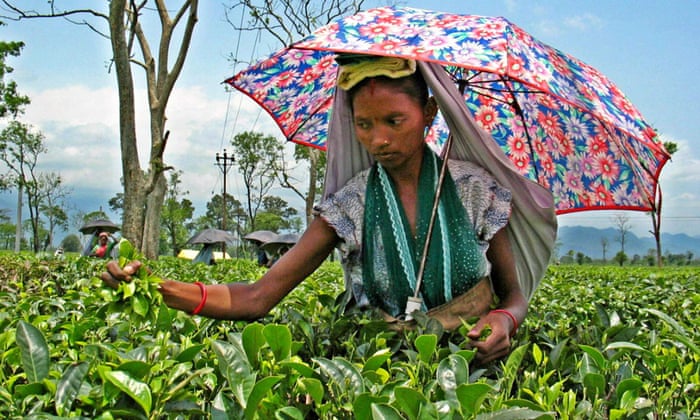
Darjeeling by Jeff Koehler review – a history of the world’s best tea


Courtesy The Guardian


I declare an interest: I am dependent on tea. I may not be up to Tony Benn levels of consumption, but I get into more of a flap when tea supplies are running low at home than when wine is, and I once nearly evicted a housemate because she scoured the inside of the teapot. (You just don’t do this.) So perhaps I was predisposed to like this book, and, indeed, I found it hard to put down.

After a while, I began to notice something odd about its turns of phrase and vocabulary: “liquor” used as a synonym for “alcohol”, and not just the infused brew of tea; hailstones “the size of baseballs”; and “color” where I was expecting colour. For, amazingly, Koehler is American and, while nowhere in the 10m square kilometres that comprise his homeland can you get a decent cup of tea, he seems to know his subject very well. The book is stuffed with startling and illuminating facts. For instance, the popularity of tea in India – particularly the ubiquitous roadside tea, spiced and sweet – dates largely from the 1960s. He recounts an auction in 2003 in which tea from the Makaibari estate – which, adhering to biodynamic practices is picked at the full moon – sold for 18,000 rupees per kilo, or nearly $400, a record at the time. The total lot was, as Koehler puts it, “the equivalent of two tea-stuffed suitcases going for $10,000 apiece”.
It is not just about Darjeeling, though; and not even just about tea. It is also about the history of colonial and post-colonial India (with an understandable bias in favour of the tea-producing regions of the north-east). Some of the accounts of colonial rule are somewhat rose-tinted, and one suspects a more apologetic or harsh tone about the days of the Raj would have come from a British writer. In the brief, bizarre yet charming chapter “Nostalgia”, he falls for the charms of the Windamere, a hotel in Darjeeling where time appears to have stood still, and where a gimlet is made with six parts gin to one of Rose’s Lime Cordial, rather than the usual four.

But as for the rest, it is a book teeming with characters and interest. Koehler, described as “writer, photographer, traveller and cook”, has the polymath’s curiosity for everything, as well as the writer’s ability to listen to and retell a good story. Rajah Banerjee, of the Makaibari estate, only decided to become a tea-planter after, or rather while, falling from a startled horse while hunting: “In the split second that I fell, I perceived a brilliant band of white light, connecting me to the trees in the forests around me ... the woods sang out melancholically in an incredible concerto, ‘Save us! Save us!” I wasn’t expecting that. Nor was I expecting this, from a description of Silver Needle, a specialty Chinese-style tea: “Its namesake color comes from the fine pubescence that coats the underside of each leaf bud.” That “pubescence” is surprising, but when you think about it – isn’t it good?


This is such a richly digressive book. Mystical experiences, language and literature (we are reminded that in The Rape of the Lock in 1714 Alexander Pope rhymed “tea” with “obey”, but that Charles Churchill, 50 years later, rhymed it with “see” in The Ghost), history, local atmosphere by the potful and even, at the end, recipes for local delicacies such as Himalayan steamed dumplings, thukpa (a Darjeeling noodle dish) and – surreally – cucumber sandwiches.

Sadly, and alarmingly, Darjeeling tea is under enormous pressures from climate change, unsympathetic agricultural practice (deforestation, mainly) and economics (the high cost of labour; the tea can only be picked by hand). It may not be with us, in any way affordably, for much longer. In which case this book will be its epitaph.

Map of Darjeeling, West Bengal 734101, India

The Brexit of 1947: ‘Scotland is more like Spain than Bengal is like the Punjab’

The differences between the countries of Europe, said the British then, were much smaller than those between the ‘countries’ of India.


The Brexit of 1947: ‘Scotland is more like Spain than Bengal is like the Punjab’

By 1888 the British were so solidly established in India that they could anticipate, if not a thousand-year Raj, at least a rule that extended well beyond their own lifetimes. In that year a man who had helped put the Raj in place gave a series of lectures in Cambridge which were later published in book form under the simple title India. The man was Sir John Strachey. Strachey had spent many years in the subcontinent, ultimately becoming a member of the Governor General’s Council. Now in retirement in England, he set his Indian experience against the background of recent political developments in Europe.

Large chunks of Strachey’s book are taken up by an administrative history of the Raj; of its army and civil services, its land and taxation policies, the peculiar position of the ‘native states’. This was a primer for those who might work in India after coming down from Cambridge. But there was also a larger theoretical argument to the effect that ‘India’ was merely a label of convenience, ‘a name which we give to a great region including a multitude of different countries’.

In Strachey’s view, the differences between the countries of Europe were much smaller than those between the ‘countries’ of India. ‘Scotland is more like Spain than Bengal is like the Punjab.’ In India the diversities of race, language and religion were far greater. Unlike in Europe, these ‘countries’ were not nations; they did not have a distinct political or social identity. This, Strachey told his Cambridge audience, ‘is the first and most essential thing to learn about India – that there is not, and never was an India, or even any country of India possessing, according to any European ideas, any sort of unity, physical, political, social or religious’.

There was no Indian nation or country in the past; nor would there be one in the future. Strachey thought it ‘conceivable that national sympathies may arise in particular Indian countries’, but ‘that they should ever extend to India generally, that “men of the Punjab, Bengal, the North-western Provinces, and Madras, should ever feel that they belong to one Indian nation, is impossible. You might with as much reason and probability look forward to a time when a single nation will have taken the place of the various nations of Europe.

Strachey’s remarks were intended as a historical judgement. At the time, new nations were vigorously identifying themselves within Europe on the basis of a shared language or territory, whereas none of the countries that he knew in India had displayed a comparable national awakening. But we might also read them as a political exhortation, intended to stiffen the will of those in his audience who would end up in the service of the Raj. For the rise of every new ‘nation’ in India would mean a corresponding diminution in the power and prestige of Empire.

Ironically, even as he spoke Strachey’s verdict was being disputed by a group of Indians. These had set up the Indian National Congress, a representative body that asked for a greater say for natives in the running of their affairs. As the name suggests, this body wished to unite Indians across the divisions of culture, territory, religion, and language, thus to construct what the colonialist thought inconceivable – namely, a singleIndian nation.

Very many good books have been written on the growth of the Indian National Congress, on its move from debating club through mass movement to political party, on the part played by leaders such as Gokhale, Tilak and (above all) Gandhi in this progression. Attention has been paid to the building of bridges between linguistic communities, religious groupings and castes. These attempts were not wholly successful, for low castes and especially Muslims were never completely convinced of the Congress’s claims to be a truly ‘national’ party. Thus it was that when political independence finally came in 1947 it came not to one nation, but two – India and Pakistan.


Play


This is not the place to rehearse the history of Indian nationalism. I need only note that from the time the Congress was formed right up to when India was made free – and divided – there were sceptics who thought that Indian nationalism was not a natural phenomenon at all. There were, of course, British politicians and thinkers who welcomed Indian self-rule and, in their own way, aided its coming into being. (One of the prime movers of the Indian National Congress was a colonial official of Scottish parentage, A. O. Hume.) Yet there were many others who argued that, unlike France or Germany or Italy, there was here no national essence, no glue to bind the people and take them purposively forward. From this perspective stemmed the claim that it was only British rule that held India and the Indians together.

Among those who endorsed John Strachey’s view that there could never be an independent Indian nation were writers both famous and obscure. Prominent in the first category was Rudyard Kipling, who had spen this formative years in – and was to write some of his finest stories about – the subcontinent. In November 1891 Kipling visited Australia, where a journalist asked him about the ‘possibility of self-government in India’. ‘Oh no!’ he answered: ‘They are 4,000 years old out there, much too old to learn that business. Law and order is what they want and we are there to give it to them and we give it them straight.’

Where Kipling laid emphasis on the antiquity of the Indian civilization, other colonialists stressed the immaturity of the Indian mind to reach the same conclusion: namely, that Indians could not govern themselves. A cricketer and tea planter insisted, after forty years there, that

“[c]haos would prevail in India if we were ever so foolish to leave the natives to run their own show. Ye gods! What a salad of confusion, of bungle, of mismanagement, and far worse, would be the instant result.

These grand people will go anywhere and do anything if led by us.

Themselves they are still infants as regards governing or statesmanship. And their so-called leaders are the worst of the lot.


Views such as these were widely prevalent among the British in India, and among the British at home as well. Politically speaking, the most important of these ‘Stracheyans’ was undoubtedly Winston Churchill. In the 1940s, with Indian independence manifestly round the corner, Churchill grumbled that he had not become the King’s first minister in order to preside over the liquidation of the British Empire.

A decade previously he had tried to rebuild a fading political career on the plank of opposing self-government for Indians. After Gandhi’s ‘saltsatyagrafra’ of 1930 in protest against taxes on salt, the British government began speaking with Indian nationalists about the possibility of granting the colony dominion status. This was vaguely defined, with no timetable set for its realization. Even so, Churchill called the idea ‘not only fantastic in itself but criminally mischievous in its effects’. Since Indians were not fit for self-government, it was necessary to marshal ‘the sober and resolute forces of the British Empire’ to stall any such possibility.

In 1930 and 1931 Churchill delivered numerous speeches designed to work up, in most unsober form, the constituency opposed to independence for India. Speaking to an audience at the City of London in December 1930, he claimed that if the British left the subcontinent, then ‘an army of white janissaries, officered if necessary from Germany, will be hired to secure the armed ascendancy of the Hindu’. Three months later, speaking at the Albert Hall on ‘Our Duty to India’ – with his kinsman the Duke of Marlborough presiding – Churchill argued that ‘to abandon India to the rule of the Brahmins [who in his opinion dominated the Congress Party] would be an act of cruel and wicked negligence’. If the British left, he predicted, then the entire gamut of public services created by them – the judicial, medical, railway and public works departments – would perish, and ‘India will fall back quite rapidly through the centuries into the barbarism and privations of the Middle Ages’.

A decade and a half after Winston Churchill issued these warnings, the British left India. A time of barbarism and privation did ensue, the blame for which remains a matter of much dispute. But then some sort of order was restored. No Germans were necessary to keep the peace. Hindu ascendancy, such as it was, was maintained not by force of arms but through regular elections based on universal adult franchise.

Yet, throughout the sixty years since India became independent, there has been speculation about how long it would stay united, or maintain the institutions and processes of democracy. With every death of a prime minister has been predicted the replacement of democracy by military rule; after every failure of the monsoon there has been anticipated country wide famine; in every new secessionist movement has been seen the disappearance of India as a single entity.

Among these doomsayers there have been many Western writers who, after 1947, were as likely to be American as British. Notably, India’s existence has been a puzzle not just to casual observers or commonsensical journalists; it has also been an anomaly for academic political science, according to whose axioms cultural heterogeneity and poverty do not make a nation, still less a democratic one. That India ‘could sustain democratic institutions seems, on the face of it, highly improbable’, wrote the distinguished political scientist Robert Dahl, adding: ‘It lacks all the favourable conditions.’ ‘India has a well-established reputation for violating social scientific generalizations’, wrote another American scholar, adding: ‘Nonetheless, the findings of this article furnish grounds for skepticism regarding the viability of democracy in India.’

The pages of this book are peppered with forecasts of India’s imminent dissolution, or of its descent into anarchy or authoritarian rule. Here, let me quote only a prediction by a sympathetic visitor, the British journalist Don Taylor. Writing in 1969, by which time India had stayed united for two decades and gone through four general elections, Taylor yet thought that

the key question remains: can India remain in one piece – or will it fragment? . . . When one looks at this vast country and its 524 million people, the 15 major languages in use, the conflicting religions, the many races, it seems incredible that one nation could ever emerge.

It is difficult to even encompass this country in the mind – the great Himalaya, the wide Indo-Gangetic plain burnt by the sun and savaged by the fierce monsoon rains, the green flooded delta of the east, the great cities like Calcutta, Bombay and Madras. It does not, often, seem like one country. And yet there is a resilience about India which seems an assurance of survival. There is something which can only be described as an Indian spirit.

I believe it no exaggeration to say that the fate of Asia hangs on its survival.


The heart hoped that India would survive, but the head worried that it wouldn’t. The place was too complicated, too confusing – a nation, one might say, that was unnatural.

In truth, ever since the country was formed there have also been many Indians who have seen the survival of India as being on the line, some (the patriots) speaking or writing in fear, others (the secessionists or revolutionaries) with anticipation. Like their foreign counterparts, they have come to believe that this place is far too diverse to persist as a nation, and much too poor to endure as a democracy.

Excerpted with permission from India After Gandhi: The History of the World's Largest Democracy, Ramachandra Guha, Picador India.

The Renegade Writer's Query Letters That Rock https://books.google.com.pk/books?isbn=1933338091 Linda Formichelli, ‎Diana Burrell - 2005 - ‎Reference The Hunza king claims they usually come true. On the Chitral side, the area was dominated by the ... The. Writer: Paul. Raffaele. I never went to journalism school, instead being trained as a broadcast journalist by the Australian Broadcasting ... There’s more to the story. On the Gilgit side, a couple of hours up the mountain is the legendary kingdom of Hunza where people are said to commonly live to 100 or more. The present king still lives there, and I could bring in the angle of some of the world’s hardiest people living in this area, which reflects the tough nature of their favourite sport, polo. They have a Wizard Of Hunza, the latest in a line of powerful shamans who stretch back beyond when Alexander the Great’s troops came here. He performs a prophetic ritual, going into a trance and communing with the queen of the snow fairies who gives him a prophecy. The Hunza king claims they usually come true. This is an excerpt from The Renegade Writer’s Query Letters That Rock. It includes a fabulous query for Smithsonian as well as comments from the writer and the assigning editor. Enjoy! [The e-mail contained two more fleshed-out story ideas.]

http://www.therenegadewriter.com/2010/12/22/query-that-rocked-for-smithsonian/

THE WORLD’S MOST EXCITING POLO MATCH ( Taking place July 7-9)


This is an adventure story of the highest order, weaving in, briefly, the fascinating history of polo with a suspenseful and enthralling tale of the rough and tumble annual battle between two traditional rivals, tough mountain men and ponies on the roof of the world. The story would be told in such a way that the reader really cares who will win and sees it through to the nail-biting climax. It also takes readers to some of the most remote people on earth living much as their ancestors have for more than two thousand years. There is potential for many stunning pictures

The roar of ten thousand spectators mingled with the thud and screech of tribal bands greets the arrival of the polo teams from Chitral and Gilgit in Pakistan’s fabled Northwest Frontier Province as they race out onto the flat grassy field in the Shandur pass, 12,000 feet above sea level, a place locals call ‘halfway to heaven.’ Normally pasture land for yaks, the setting is as spectacular as the game itself with the pass dominated by giant Hindukush snow mountains, 40 of them soaring over 20,000 feet and with the biggest, Trichmir, at more than 24,000 feet.

Best regards, Paul

THE WORLD’S MOST EXCITING POLO MATCH ( Taking place July 7-9)

This is an adventure story of the highest order, weaving in, briefly, the fascinating history of polo with a suspenseful and enthralling tale of the rough and tumble annual battle between two traditional rivals, tough mountain men and ponies on the roof of the world. The story would be told in such a way that the reader really cares who will win and sees it through to the nail-biting climax. It also takes readers to some of the most remote people on earth living much as their ancestors have for more than two thousand years. There is potential for many stunning pictures

The roar of ten thousand spectators mingled with the thud and screech of tribal bands greets the arrival of the polo teams from Chitral and Gilgit in Pakistan’s fabled Northwest Frontier Province as they race out onto the flat grassy field in the Shandur pass, 12,000 feet above sea level, a place locals call ‘halfway to heaven.’ Normally pasture land for yaks, the setting is as spectacular as the game itself with the pass dominated by giant Hindukush snow mountains, 40 of them soaring over 20,000 feet and with the biggest, Trichmir, at more than 24,000 feet.

Nestled amid some of the most spectacular mountain scenery in the world, the pass is an historic place, one of the landmarks of ‘The Great Game,’ where British and Russian spies in the 19th century played a risky game of realpolitik with the region’s kings and rajahs. Alexander the Great’s troops passed through here on their long journey of conquest, and many stayed to marry mountain girls and settle. Today, it is a volatile land with Afghanistan crowding it on the north, west and eastern borders and China overhead.

Polo in the West is a sport of the very rich, but in these remote valleys it is the national sport of a pony-loving people with each tiny village and town fielding their own teams which play the year round. Tillers of the field, carpenters, schoolteachers, yak herders take to the field with nobles, the aristocracy of polo determined by who is the best player.

The teams play polo closest to its original form. The tough, highly skilled mountain men and their rugged ponies play much the same way as they have for over eight hundred years, the game introduced here by Ali Sher Khan, a descendant of Ghenghis Khan. Unlike modern polo, there are hardly any rules, no referee and the six-men teams go at each other with a wild passion that often results in injury and sometimes death. They use their sticks not only to hit the ball but also to belt the arms and shoulders of their opponents. If a player breaks an arm or leg during a match, he has it quickly strapped and returns to the game.

No one plays this ancient and exciting sport better than the teams of Chitral and Gilgit, the region’s two major towns, rivals for centuries separated by 120 miles of narrow high mountain pathway with the Shandur Pass at the mid-point. The annual match is so eagerly anticipated that more than 10,000 spectators flock to the pass from the two towns and mud-hut villages in nearby and distant mountains and valleys.

Most people here still live and dress much as their ancestors have since biblical times. Settled on the slopes and rocky outcrops at the pass, a natural grandstand, the Chitral supporters are kept on one side of the field, Gilgit fans the other with a medieval-like bazaar in between. Because of their fervour for the annual match, several hundred riot police are on hand to prevent any fighting between rival supporters.

Polo began in Persia in the 6th century B.C., and as it spread across Central Asia the war-like tribesmen took to it with a passion, using it as a training game for cavalry units. With as many as 100 players on each side, it was like a miniature battle. That zest for the game has never subsided.

Getting to the match is risky enough for the players and their ponies. To reach the field at the Shandur Pass they must make a five-day journey along narrow crumbling pathways that snake across the high mountains with drops of a thousand or more feet.

Ideally, I’d hire a pony and ride along the mountain pathways to the pass with the polo players from one of the teams. Each player is allowed just the one pony for the match, and to acclimatise them as they climb higher each night they play practice games when camp has been made along the trail.

We would meet the major players and follow them through the thrilling final match, between the best players of Chitral and Gilgit. It ends with a victory dance by the thousands of supporters of the winning team who are borne off the field on eager shoulders, heroes through the valleys for the next twelve months.

My friend, Prince Siraj Ulmulk, a grandson scion of Chitral’s last king, will ensure that I have the best possible access. I’d also be able to stay at his home, a former palace, to get an idea of how the high and mighty lived in this high and mighty place.

There’s more to the story. On the Gilgit side, a couple of hours up the mountain is the legendary kingdom of Hunza where people are said to commonly live to 100 or more. The present king still lives there, and I could bring in the angle of some of the world’s hardiest people living in this area, which reflects the tough nature of their favourite sport, polo. They have a Wizard Of Hunza, the latest in a line of powerful shamans who stretch back beyond when Alexander the Great’s troops came here. He performs a prophetic ritual, going into a trance and communing with the queen of the snow fairies who gives him a prophecy. The Hunza king claims they usually come true.

On the Chitral side, the area was dominated by the Taliban during their rule across the border, the rugged mountains of Afghanistan being just a few miles away, and the influence of Islamic fundamentalism in the town is still strong. As well, in the mountains perched above Chitral are the Kalash, the original tribe on which the Kipling story and movie starring Sean Connery and Michael Caine, The Man Who Would Be King, are based. They are a colourful people, a small band of pagans living within a sea of Muslims, and are fiercely independent.

Of course, these are side plots giving give the story more colour, but at centre of the story is the mad, wild, fierce polo match on the roof of the world.

[The e-mail contained two more fleshed-out story ideas.]

12 Ancient Forts That Prove Pakistan Has Unquestionably Rich History!.. and Five of them are in Gilgit Baltistan.. Baltit Fort, Altit Fort, Khaplu Fort, Shagir Fort, Skardu Fort... An Article BY Naveed Murtaza Blogger/founder CEO of trickypedia post and this blog from Hunza

[caption id="attachment_594" align="alignnone" width="300"]12 Ancient Forts That Prove Pakistan Has Unquestionably Rich History!.. and Five of them are in Gilgit Baltistan.. Baltit Fort, Altit Fort, Khaplu Fort, Shagir Fort, Skardu Fort... 12 Ancient Forts That Prove Pakistan Has Unquestionably Rich History!.. and Five of them are in Gilgit Baltistan.. Baltit Fort, Altit Fort, Khaplu Fort, Shagir Fort, Skardu Fort... [/caption]


Pakistan is a scenic collage of several colours – the more you explore, the more you fall for it! Try to focus ahead of all those glacial mountains and lush green fields. If you have archaeological aesthetics, satisfy them with historical fort-marks of Pakistan.

Below is a list of 12 fortresses in Pakistan, each one is a unique monument in its own way!

1. Quetta Fort:


Quetta fort – frequently known as Quetta Qilla is a military garrison and ancient fortress; built during British Empire rule. The fort was a part of British strategy of converting Quetta into a military town.

Source: Source: tguidegb.blogspot.com

2. Skardu Fort:


This King of Forts is located in the city of Skardu in Gilgit. This historic landmark had served as an area of Pakistani-Platoon deployment; to protect the locals during Indo-Pak war. The famous Australian film maker Greg Child narrates about its glory that it “perched above the junction of the rivers” and overlooks the Rock of Skardu.

Source: Source: www.forumpakistan.com

3. Shigar Fort


The Shigar fort (The Fort on Rock) was built by King of Amacha Dynasty of Shigar in 17th century. After partial demolition through years, it was restored by Agha Khan Cultural Service Pakistan (AKCSP) and converted into a museum and luxury hotel.

Source: onlybalti.blogspot.com

4. Altit Fort


Altit fort is home of the hereditary rulers of Hunza. The fort, particularly the Shikari tower is a classical masterpiece that is around 1100 years old; which makes it the oldest monument of Gilgit and a testimony of Mir’s reign.

Source: trekearth.com

5. Rawat fort


A 16th century monument, Rawat fort lodges in Pothohar Pakistan. It was crafted for the sake of warrior clans, raised by local tribes to defend the Pothohar plateau by Gakhars.

Source: Dawn

6. Derawar fort


Derawar fort is a large square fortress that will give you the royal Rajasthan treat! Derawar was built by Hindu Rajput, Bhati of Jaisalmer in Bahawalpur. It is a magnificent structure whose forty bastions of Derawar are visible for many miles in the Cholistan Desert.

Source: www.trekearth.com

7. Pharwala castle


On the historic countdown, Pharwala is momentous. It is naturally defended by a small Himalayan range and by River Sawan. It is a 15th century Gakhar’s fort that is about 40 km from Rawalpindi.

Source: www.renaissancefestival.com

8. Attock fort


You can still find signs of great Emperor Akbar’s reign through the Attock Fort. The fort was built between 1581 – 1583, under the authority of Khawaja Shamsuddin Khawafi, to protect the passage of River Indus.

Source: faridbinmasood.wordpress.com

9. Khaplu fort


Think of the prestigious Khaplu Palace famed as Yabgo Khar (meaning “The fort on the roof”), and you will be in awe of this architectural triumph. The palace is located in Khaplu, Baltistan. In the 19th century, it served as a royal residence for the Raja of Khaplu.

Source: www.flickr.com

10. Baltit fort


Baltit fort gives Hunza a bygone touch. An ancient fort, founded in the 15th century dated back to 700 years ago, with rebuilds and alterations over the centuries. The architectural style is a clear indication of Buddhist influence.

Source: commons.wikimedia.org

Source: gilgit-baltistan.com

11. Ranikot fort


Indicative of the Jamshoro legacy – Ranikot Fort is also known as The Great Wall of Sindh. It is believed to be the world’s largest fort. The hill top view and the archeological residual of the great walls make it an attractive place to visit and study.

Source: www.wikipedia.org

12. Umerkot fort


The birth place of Emperor Akbar Umerkot fort base in Umerkot, Sindh also called Amarkot. The fort was earlier the property of Hindu Rajput dynasty; has been taken over by Government after formation of Pakistan. It is a heritage hub accompanied with ancient stories of Umer Marvi.

Source: www.flicker.com

An Article BY Naveed Murtaza Blogger from Hunza